Preserving data ecosystems

Make your reverse cloud migration a success

Miria - The best reverse cloud migration software for every file storage recovery projet

Miria for Migration enables you to migrate and repatriate your large file data sets back to on-prem storages while successfully preserving data integrity and managing transfer challenges.​

Need help with a storage migration ? Contact an Atempo Expert

What are the reasons for reverse cloud migration and what are the expected benefits?

  • A reverse cloud migration process is simply the act of moving data back from a cloud storage back to on-prem storage.
  • Outsourcing of IT resources, limitless computing power, increased use of delegated services (SaaS, IaaS, PaaS, etc.)... Don't get us wrong, the cloud is here to stay but when you scratch the surface a little, you'll find that in the 2020s, many organizations are relocating all or part of their data and applications to their own datacenters.
  • According to an IDC report, in 2018, 80% of companies have recovered workloads and expect to migrate back 50% of their applications from the cloud to on-premise or private hosting.
  • Here are the reasons behind this exodus: a mix of search for more cost control, higher efficiency and higher security.
Storage cost savings
Wave goodbye to egress and per GB storage rental
Improved service levels
Your data is local and accessible
Improved control over data
Compute and access needs made simple
Implement hybrid cloud
It's the storage choice for many

Reverse cloud migration challenges

Migrating files between storages and NAS is not an easy task : data migration faces many risks and challenges.

Why do you need to address these challenges ?

Understand the risks associated with data migration

NEVER-ENDING, UNMANAGEABLE MIGRATION PROJECTS HAVE MANY PITFALLS

Data migration should never exceed a certain duration. The longer it is, the more complex the process becomes. All the modified files have to migrate again, there are more file transfers, etc. This leads to greater consumption of network bandwidth and mobilizes your resources in charge of the storage management.

LOSING DATA INTEGRITY IS A FREQUENT TRAP THROUGH INSUFFICIENT PREPARATION AND ADEQUATE TOOLS

Incompatibility between different storages can lead to a loss of access rights and a data loss. The consequences are considerable for the business and represents a waste of time, productivity and money.

INCOMPATIBLE STORAGE PLATFORMS ADD TO MIGRATION COMPLEXITY

When there are storage platform incompatibilities, businesses have no choice but to migrate data manually lengthening project times and data loss risks. An open solution can address this challenge.

PRODUCTION DOWNTIME? THE ELEPHANT IN THE ROOM FOR ALL MIGRATION PROJECTS

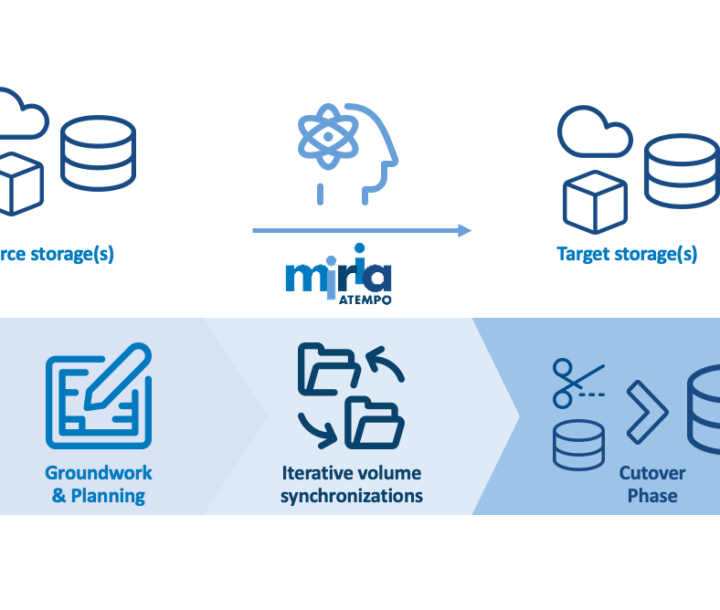
The challenge? Reduce the impact on production and users. A powerful tool migrates data and maintains production reducing the time required for a final cutover.

What makes Miria for Migration the best migration strategy tool?

​Organizations face many challenges when migrating files, folders and data from storage A to storage B. Data migrations projects are often complex, time-consuming and involve multiple technologies and IT teams, particularly when involving petabytes of data in complex environments. That’s why you need a powerful tool to manage processes efficiently and securely. Our data migration software, Miria for Migration is a complete software platform that migrates or permanently replicates multi-petabytes saving time, money and effort.​ Atempo Miria teams support you from the initial technical audit to the implementation and acceptance phases.

Miria’s key benefit? Keeping data accessible for analysis and value extraction. Whether you need to migrate your files and data to cloud or object storage, switch technologies or filesystem versions, simply increase performance and storage capacity, Miria is the tool to succeed your data migration strategy!​

Miria for Migration Overview

  1. Complete Software and Professional Services solution: initial audit, constant monitoring and final verifications​ 
  2. Incremental and automatic file migration between heterogeneous storages​ 
  3. Parallelization and multi-threading to separate the tasks of detecting objects and the movement of this data. 
  4. Performance adjustment by simple addition or removal of a Data Mover: Scalability, Load Balancing, Failover​
  5. Automatic check of migrated files integrity and accessibility

The 5 keys benefits of Atempo Miria

Organizations face many challenges when migrating files, folders and data from storage A to storage B. Data migrations projects are often complex, time-consuming and involve multiple technologies and IT teams, particularly when it involves petabytes of data in complex environments. That’s why you need a powerful tool to manage processes efficiently and securely. Our data migration software, Miria for Migration is a complete software platform that migrates or permanently replicates multi-petabytes saving time, money and effort.​

Overcoming the challenges of data migration

Before the actual process of moving data from one storage to another, significant preparation is required to understand what data needs to be moved and in which order. Analyze network and processing capacity and optimize synchronization steps prior to the final storage cutover.

Atempo puts teams at your disposal to manage projects over 100 TBs. Above this, internal teams and free software tools might put your data in jeopardy or cause serious delays to your migration schedule.
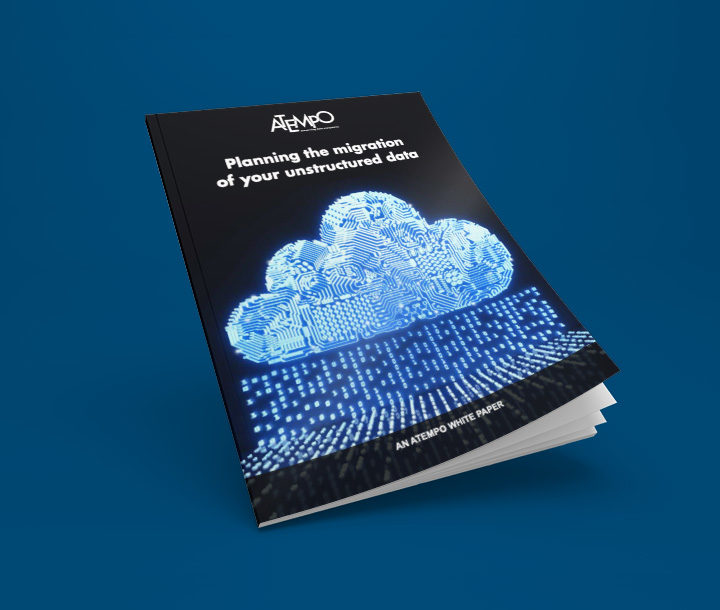
Read out our free White Paper

The 7 steps of a successful data migration plan?

  1. Choose the data migration tools. Tools that can handle metadata, files and the volumes you need to migrate.
  2. Perform a pilot test. Perform security backups and other risk control measures to eliminate any data loss risks.
  3. Schedule and run the migration steps. Set the cycle of incremental synchronizations with the target storage runs until the two storages converge. Ensure source storage data remains accessible during the entire migration.

  1. Run post-migration checks. In-depth analysis, reporting and checks are essential. Ensure the new storage is fully operational before making the final switch – which should be seamless for your users.
  2. Identify internal workflow needs. Get all key stakeholders on board to discuss requirements, goals and risks of the data migration plan. This step should provide a working document with full specifications and delivery objectives
  3. Map out the migration processes. Evaluate the volumes of data to migrate and the complexities of the IT environments.
  4. Prepare data. Analyze and correct existing data sets. Eliminate unwanted data. Fix the ideal schedule for actual migration (summer vacations, low activity period…).

THEY TRUST OUR DATA MIGRATION SOLUTIONS

“Our migration of over 1200 Windows shares and 66 million files to Nutanix Files needed to be accomplished as smoothly and as rapidly as possible. With a minimum of impact to our users. Atempo and Nutanix teams handled the whole project perfectly in under 3 weeks. We are now fully functional on Nutanix Files and benefitting from the performance and cost reductions of their Enterprise scale out file storage solution.”
Henk Kleine, Systems Administrator and Data Migration Project Manager at GVB

“Our customers should be free to change to a new platform when it suits their business. Data integrity and transfer speeds are key to meeting technological challenges and the costs of any successful Data Migration process.”
Pascal Potier, Atempo’s VP Professional Services.

Need Help with a Project?


Contact an Atempo Expert